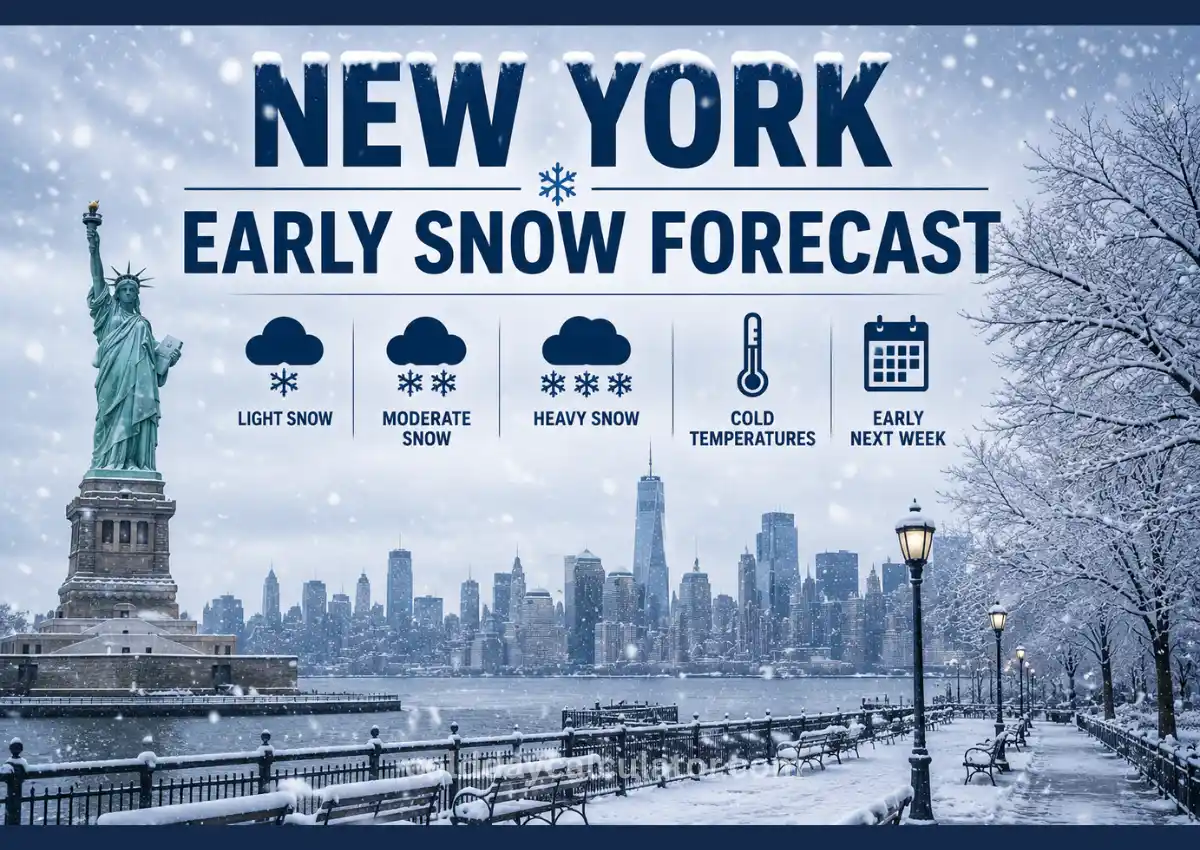
The latest New York early snow forecast suggests parts of the state could see the first measurable snowfall earlier than average this season, especially across western and northern regions. While New York City often waits until late November or December for accumulating snow, colder zones like Buffalo, Syracuse, and the Adirondacks can experience early-season flurries as soon as October.
New York weather changes quickly during fall. One week may feel like late summer, while the next brings overnight freezes, lake-effect snow bands, and sudden Arctic air outbreaks. Because of these rapid swings, tracking the first snowfall outlook for New York requires more than just checking historic averages.
This in-depth guide breaks down early snow probabilities, freeze timing, regional snowfall risks, travel impacts, historical trends, climate signals, and the atmospheric patterns most likely to shape the 2026 winter season across New York.
Current New York Early Snow Outlook
Current long-range weather indicators suggest:
- Above-average early snow potential across western New York
- Moderate October snowfall risk in higher elevations
- Delayed measurable snowfall risk in NYC and Long Island
- Increased freeze potential during overnight cold outbreaks
- Higher lake-effect snow activity near Lakes Erie and Ontario
Forecasters continue monitoring:
- Jet stream positioning
- Canadian Arctic air movement
- Great Lakes water temperatures
- North Atlantic storm tracks
- ENSO and La Niña climate signals
Because these systems evolve constantly, snowfall timing can still shift significantly over the coming weeks.
Why Early Snow in New York Is So Unpredictable
New York is one of the most geographically diverse weather states in the country. Coastal warmth, mountain elevations, urban heat islands, and lake-effect systems all influence when snow arrives.
That means two regions in the same state can experience completely different winter conditions on the same day.
| Region | Typical First Snow Timing | Early Snow Risk |
|---|---|---|
| Buffalo | October | Very High |
| Syracuse | Late October | High |
| Albany | Early November | Moderate |
| Hudson Valley | Early November | Moderate |
| NYC | Late November–December | Low |
| Long Island | December | Low |
Month-by-Month New York Snow Timeline
September Snow Chances
Most of New York remains snow-free during September. However, isolated mountain flurries occasionally develop in:
- Adirondacks
- Tug Hill Plateau
- Catskills
These events are rare but possible during strong early Arctic intrusions.
October First Snow Risk
October is when early snow season begins across upstate New York.
Buffalo, Rochester, Syracuse, and higher elevations frequently experience:
- Light accumulating snow
- Lake-effect bursts
- Morning frost events
- Overnight freezing temperatures
October snow in NYC remains uncommon because warmer ground temperatures prevent accumulation.
November Snow Outlook
November usually marks the true beginning of winter conditions across most of New York.
Snow potential increases rapidly due to:
- Stronger cold fronts
- Longer overnight freezes
- Developing coastal systems
- Increasing lake-effect activity
By late November, measurable snowfall becomes possible even in downstate regions.
Thanksgiving Snow Potential
Thanksgiving week often becomes one of the busiest travel periods for early winter storms.
Travel disruptions become more likely across:
- I-90 corridor
- Buffalo region
- Adirondacks
- Capital Region
- Catskills
What Causes Early Snow in New York?
Jet Stream Dips
When the jet stream shifts southward, cold Canadian air moves into New York earlier than normal, increasing snowfall potential.
Lake-Effect Snow
Lake-effect snow develops when cold air passes over relatively warm Great Lakes water.
This creates narrow but intense snow bands capable of producing heavy accumulation in:
- Buffalo
- Rochester
- Syracuse
- Tug Hill Plateau
Coastal Storms & Nor’easters
Strong Atlantic coastal systems can bring early snow to NYC and eastern New York if cold air arrives before precipitation begins.
Arctic Air Outbreaks
Sudden temperature collapses during fall often trigger the season’s first freeze and first snowfall events.
New York First Freeze Forecast
In many areas, the first freeze arrives before the first measurable snow.
| Region | Average First Freeze | Freeze Risk Level |
|---|---|---|
| Adirondacks | Late September | Very High |
| Buffalo | Mid October | High |
| Albany | Mid to Late October | Moderate |
| Hudson Valley | Late October | Moderate |
| NYC | Mid November | Lower |
Freeze timing matters because it impacts:
- Road icing
- Agriculture
- Heating demand
- Outdoor plumbing
- Travel safety
New York Early Snow Forecast by Region
You can calculate snow day using our tool Snow Day CalculatorNew York City Early Snow Forecast
NYC usually experiences its first measurable snow between late November and early December. The urban heat island effect and Atlantic Ocean warmth delay accumulation during early fall.
Flurries may occur earlier, but meaningful accumulation before Thanksgiving remains relatively uncommon.
Buffalo Early Snow Forecast
Buffalo has one of the highest early snow risks in the state because of intense lake-effect activity near Lake Erie.
October snowfall is common, and strong snow bands can rapidly create hazardous travel conditions.
Syracuse Early Snow Forecast
Syracuse regularly sees measurable snowfall by late October. Cold air moving across Lake Ontario increases early-season accumulation risk.
Albany Early Snow Forecast
Albany often receives its first snow during late October or early November due to colder inland temperatures and northern air movement.
Adirondacks & Tug Hill Outlook
These regions often experience New York’s earliest snowfall each season due to elevation and lake-effect enhancement.
Historical First Snowfall Records in New York
| Region | Average First Snow | Earliest Snow Recorded |
|---|---|---|
| NYC | Late Nov–Dec | October |
| Buffalo | Late October | September |
| Syracuse | Late October | October |
| Albany | Early November | October |
| Long Island | December | Early November |
Historic weather records show that early snow is normal in many upstate areas but far less common near the coast.
Travel & Road Impact Forecast
Early snowstorms can severely impact transportation across New York.
Highest-risk travel areas include:
- I-90 corridor
- Buffalo metro
- Tug Hill region
- Adirondack highways
- Bridges and elevated roadways
Common travel dangers include:
- Black ice
- Whiteout conditions
- Rapid visibility loss
- Bridge icing
- Lake-effect snow squalls
Major airports including JFK, LaGuardia, Buffalo Niagara, and Syracuse Hancock may also experience delays during early winter systems.
Power Outage Risks During Early Snow
Heavy wet snow during October and November often causes tree damage and fallen power lines.
Areas most vulnerable include:
- Hudson Valley
- Catskills
- Adirondacks
- Western New York
Wet snow becomes especially dangerous when leaves remain on trees because branches carry extra weight.
Residents should prepare:
- Backup batteries
- Flashlights
- Portable chargers
- Emergency heating plans
- Food and water supplies
How Early Snow Impacts Schools in New York
School closure decisions vary significantly between upstate and downstate districts.
Upstate regions often remain open during moderate snow because road crews and transportation systems are heavily prepared for winter weather.
Downstate districts usually close more quickly due to:
- Dense traffic
- Limited snow infrastructure
- Ice risks
- Public transit concerns
School officials monitor:
- Road safety
- Bus route conditions
- Freezing rain risk
- Wind speeds
- Morning commute timing
New York Ski Season Outlook
Early snowfall strongly impacts ski resorts across New York.
Resorts in:
- Lake Placid
- Whiteface
- Hunter Mountain
- Windham
- Gore Mountain
depend heavily on early cold weather for snowmaking operations.
Above-average October and November cold patterns could help resorts open earlier this season.
Winter Tire & Home Preparation Guide
Experts recommend preparing before the first major freeze arrives.
Vehicle Preparation
- Install winter tires
- Check antifreeze levels
- Replace worn windshield wipers
- Carry emergency supplies
Home Preparation
- Insulate exposed pipes
- Check heating systems
- Seal windows and doors
- Prepare generators safely
Climate Trends Affecting New York Snowfall
Long-term climate patterns continue changing how snow develops across New York.
Recent decades show:
- Warmer average winters
- Shorter snow seasons
- More intense rainfall events
- Increasing heavy wet snow events
- Reduced snowpack in some regions
At the same time, extreme snowstorms remain possible because warmer air can hold more moisture.
This means New York may experience fewer snow days overall while still seeing occasional major blizzards.
Is Snow Coming to New York Soon?
Short-term snow forecasting focuses on:
- Incoming cold fronts
- Overnight freezes
- Storm track positioning
- Lake-effect setup
- Moisture availability
Longer-range models monitor:
- Jet stream changes
- Polar air movement
- North Atlantic Oscillation patterns
- Ocean temperature anomalies
Forecast confidence generally increases within 7 to 10 days of a potential storm system.
Final Thoughts
The 2026 New York early snow forecast points toward another highly variable winter season with strong regional differences across the state. While western and northern New York could see snow arrive relatively early, downstate regions may wait until much later in the season for measurable accumulation.
Because weather patterns remain highly dynamic during fall, tracking updated forecasts, freeze timing, and storm development becomes extremely important for travel planning, school schedules, and winter preparation.
Whether you live in Buffalo, Syracuse, Albany, the Hudson Valley, or New York City, staying ahead of changing weather conditions is the best way to prepare for the arrival of winter.
Resources
- National Weather Service
- NOAA
- Climate Prediction Center
- NWS Buffalo Forecast Office
- NWS New York City Forecast Office
- NWS Albany Forecast Office
- WeatherSpark Climate Data
Related Posts
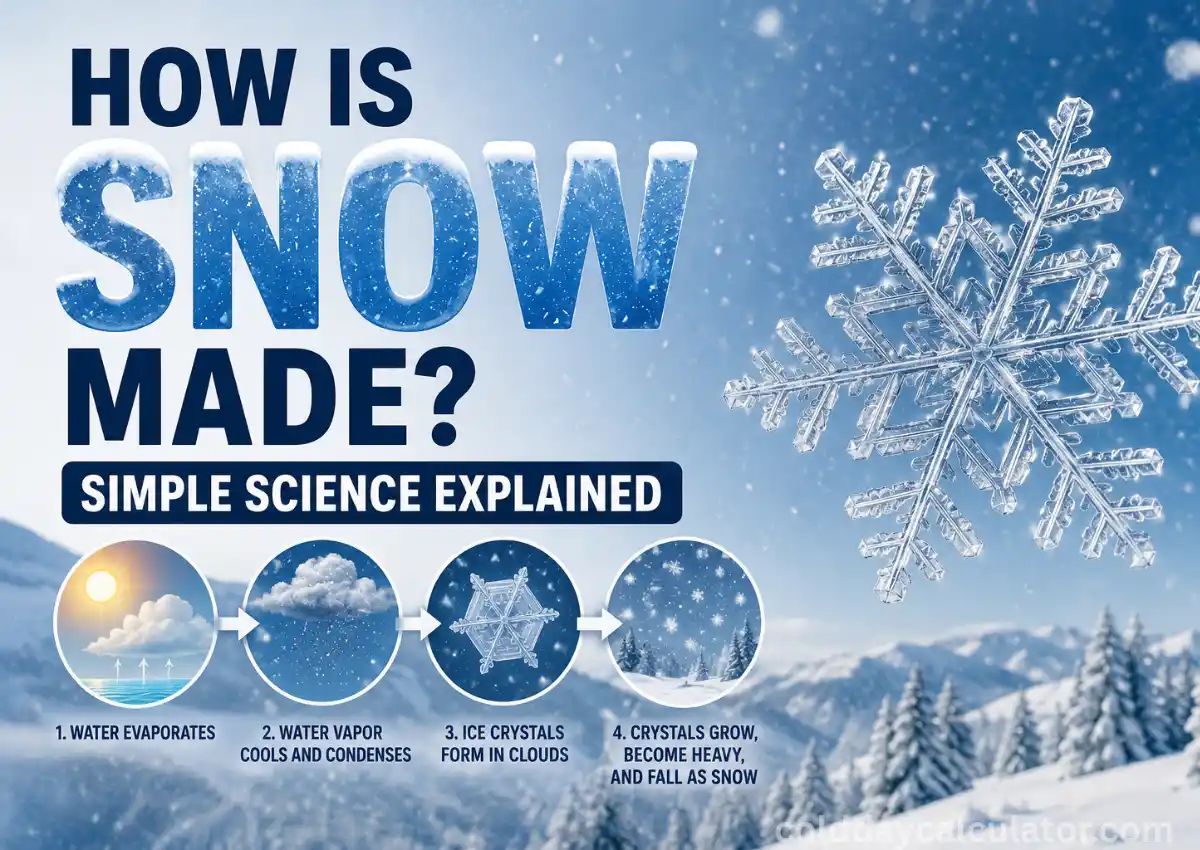
How Is Snow Made? Simple Science Explained
Snow may look magical when it falls from the sky, but the science behind it is actually a fascinatin...

How to Drive in Snow Safely for Beginners
If you are learning how to drive in snow for the first time, the experience can feel stressful and u...
Does It Snow in Texas? Cities That Get Snow
Yes, it does snow in Texas, especially in northern and western parts of the state during winter. Whi...