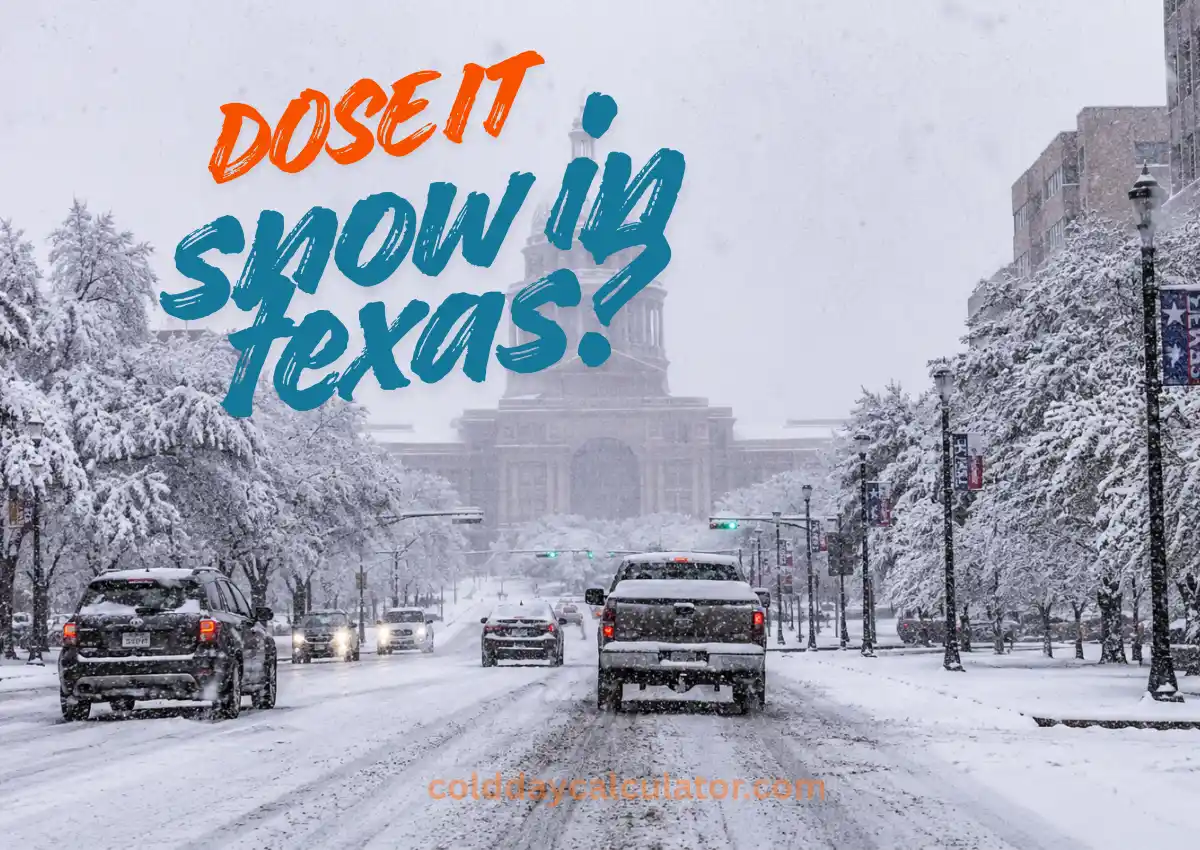
Yes, it does snow in Texas, especially in northern and western parts of the state during winter. While Texas is famous for heat, deserts, and long summers, several regions regularly experience snowfall, freezing rain, and winter storms every year. Cities in the Texas Panhandle and elevated mountain areas can receive measurable snow annually, while southern cities like Houston rarely see snowfall.
If you are searching for “does it snow in Texas,” the answer depends heavily on where you are in the state. Texas is enormous, covering more than 268,000 square miles, and weather conditions vary dramatically between the Gulf Coast, North Texas plains, deserts, and mountain regions.
Some parts of Texas experience blizzard conditions and heavy snow accumulation, while other areas may go years without seeing a single snowflake. You can also track cold weather patterns and winter conditions through tools available at Cold Day Calculator.
Does Texas Really Get Snow?
Texas absolutely gets snow, although snowfall is much more common in some regions than others. Northern Texas and the Panhandle regularly experience winter storms because Arctic air masses from Canada can move south across the Great Plains.
According to National Weather Service climate data, snowfall occurs most frequently between December and February. January is typically the coldest month statewide and often produces the highest chance of measurable snow.
Texas weather becomes especially unpredictable during strong winter jet stream shifts. Cold Arctic air colliding with Gulf moisture can create snow, sleet, freezing rain, or ice storms across large parts of the state.
Where Does It Snow in Texas?
Snowfall in Texas depends mainly on elevation, latitude, and winter storm tracks.
| Region | Snow Frequency | Winter Weather Type |
|---|---|---|
| Texas Panhandle | Very High | Regular snowstorms & blizzards |
| North Texas | Moderate | Snow, sleet, ice storms |
| West Texas Mountains | High | Mountain snowfall |
| Central Texas | Occasional | Rare snow & freezing rain |
| South Texas | Very Rare | Mainly cold rain |
The northern half of Texas generally experiences much colder winters than coastal and southern regions.
Snow in the Texas Panhandle
The Texas Panhandle is the snowiest region in the state. Cities like Amarillo and Lubbock experience measurable snowfall almost every winter.
According to NOAA climate averages:
- Amarillo averages around 17–18 inches of snow annually
- Lubbock averages roughly 8–10 inches per year
- Some winters bring severe blizzards and whiteout conditions
The region’s open plains and exposure to Arctic cold fronts make winter storms more intense compared to the rest of Texas.
Blizzard warnings occasionally occur when strong winds combine with heavy snowfall and low visibility.
Does It Snow in Dallas?
Yes, Dallas gets snow, but major snow accumulation is inconsistent from year to year.
Dallas winters are more likely to bring:
- Sleet
- Freezing rain
- Light snow
- Ice storms
Average annual snowfall in Dallas is usually around 1 to 2 inches, although some winters produce much higher totals during strong cold outbreaks.
The larger issue in Dallas is often ice rather than snow itself. Even thin ice layers can create dangerous driving conditions because roads and bridges freeze quickly.
Does It Snow in Austin?
Snow in Austin is uncommon but possible during powerful Arctic outbreaks.
Most winters in Austin stay too warm for major snowfall, with cold rain and freezing drizzle being far more common. However, measurable snow has occurred several times throughout history.
Winter weather in Austin can still become dangerous because freezing rain and sleet quickly impact roads, power lines, and infrastructure.
During severe winter systems, school closures and travel disruptions become common across Central Texas.
Does It Snow in Houston?
Houston rarely gets snow because of its location near the Gulf of Mexico.
Winter temperatures in Houston usually remain above freezing, which limits snowfall potential. However, rare snow events have occurred during unusually strong Arctic air outbreaks.
One of Houston’s most memorable snowfalls happened during Christmas Eve 2004, when parts of the city saw measurable snow accumulation.
Although snowfall is rare, freezing rain and icy roads occasionally impact southeastern Texas during winter storms.
Does It Snow in San Antonio?
San Antonio occasionally experiences snow, sleet, or freezing rain during stronger winter systems.
The city’s subtropical climate keeps average winter temperatures relatively mild, but cold Arctic air can still occasionally push temperatures below freezing.
Most winter precipitation in San Antonio falls as:
- Cold rain
- Ice pellets
- Freezing drizzle
- Light sleet
Significant snowfall remains relatively uncommon.
Snow in West Texas Mountains
Texas mountain regions receive some of the state’s most reliable snowfall because elevation significantly lowers temperatures.
Snow regularly falls in:
- Guadalupe Mountains
- Davis Mountains
- Chisos Mountains
Guadalupe Peak, Texas’s highest point at 8,751 feet, frequently experiences winter snowstorms and freezing conditions.
These mountain regions sometimes resemble winter conditions found in nearby New Mexico and southern Colorado.
Why Does It Snow in Texas?
Snow develops in Texas when cold Arctic air combines with atmospheric moisture.
Several weather systems help create Texas snowfall:
Arctic Air Outbreaks
Cold polar air masses occasionally plunge deep into the southern United States during winter.
Jet Stream Dips
When the jet stream shifts southward, freezing temperatures spread across Texas more easily.
Gulf Moisture
Moisture from the Gulf of Mexico provides precipitation needed for snow, sleet, or freezing rain formation.
Elevation Effects
Mountain elevations in western Texas cool faster and support snowfall more consistently.
The February 2021 Texas Winter Storm
One of the most severe winter events in Texas history occurred during February 2021.
The storm brought:
- Heavy snow
- Record cold temperatures
- Massive power outages
- Frozen infrastructure
- Dangerous travel conditions
Millions of Texans lost electricity during prolonged freezing temperatures.
Snowfall totals included:
- Dallas: more than 4 inches
- Austin: significant ice accumulation
- Houston: snow and freezing rain
The storm demonstrated how vulnerable Texas infrastructure can become during extended winter conditions.
Snowiest Cities in Texas
| City | Average Annual Snowfall |
|---|---|
| Amarillo | 17–18 inches |
| Lubbock | 8–10 inches |
| El Paso | 5–6 inches |
| Dallas | 1–2 inches |
| Austin | Less than 1 inch |
| Houston | Trace snowfall only |
Northern Texas consistently experiences the highest snowfall totals in the state.
Does Texas Have Blizzards?
Yes, blizzard conditions occasionally occur in the Texas Panhandle.
According to the National Weather Service, a blizzard requires:
- Winds above 35 mph
- Visibility below one-quarter mile
- Conditions lasting at least 3 hours
Because the Panhandle contains open flat terrain, strong winter winds can create severe drifting snow and dangerous visibility problems.
Ice Storms vs Snowstorms in Texas
Ice storms are often more dangerous than snowstorms in Texas.
Freezing rain can create:
- Bridge icing
- Power outages
- Fallen trees
- Road closures
- Airport delays
Texas infrastructure is generally designed for heat rather than prolonged freezing weather, which is why even small winter storms can create major disruptions.
How Cold Does Texas Get?
| City | Average Winter Low |
|---|---|
| Amarillo | 24°F (-4°C) |
| Dallas | 39°F (4°C) |
| Austin | 42°F (5°C) |
| Houston | 47°F (8°C) |
| El Paso | 33°F (1°C) |
North Texas regularly experiences freezing overnight temperatures during winter.
Climate Change and Texas Snowfall
Climate research shows Texas winters are warming overall, but extreme cold events remain possible.
Recent climate studies indicate:
- Warmer average winter temperatures
- Greater weather variability
- More intense precipitation events
- Occasional severe Arctic outbreaks
Scientists continue studying how Arctic warming may influence unusual southern winter storms.
This means Texas could experience fewer average snow days overall while still facing occasional extreme winter events.
Interesting Facts About Snow in Texas
- Snow has been recorded in every Texas county at least once
- Amarillo is among the snowiest major Texas cities
- Houston experienced measurable Christmas Eve snowfall in 2004
- El Paso occasionally receives desert snowstorms
- Texas Panhandle blizzards can produce whiteout conditions
FAQs About Snow in Texas
Does it snow every year in Texas?
Northern Texas and the Panhandle usually receive snow annually, while southern Texas may go several years without measurable snowfall.
What is the snowiest city in Texas?
Amarillo is generally considered one of the snowiest major cities in Texas.
Does Dallas get snow every winter?
Dallas frequently experiences winter precipitation, but measurable snowfall totals vary greatly each year.
Why is Texas affected so badly by ice storms?
Texas infrastructure is not built for prolonged freezing conditions, so roads, power systems, and utilities become vulnerable during winter weather.
Can Texas experience blizzards?
Yes, especially across the Panhandle where strong winds and open terrain create ideal blizzard conditions.
Resources & Weather References
Here are official sources and climate references used for snowfall data and winter weather information:
- National Weather Service
- NOAA Climate Data
- Texas State Climatologist Office
- National Centers for Environmental Information
- Texas Department of Transportation Winter Weather Resources
Final Thoughts
So, does it snow in Texas? Yes, especially across the Panhandle, North Texas, and western mountain regions. While much of the state is known for heat and warm weather, winter snowfall remains a regular part of life for millions of Texans.
Some cities experience snow almost every winter, while others only see it during rare Arctic outbreaks. Ice storms, freezing rain, and sudden cold snaps are often even more disruptive than snowfall itself.
Whether you live in Dallas, Amarillo, Austin, Houston, or West Texas, understanding how winter weather develops can help you better prepare for Texas snowstorms and freezing conditions.
Related Posts
How Is Snow Made? Simple Science Explained
Snow may look magical when it falls from the sky, but the science behind it is actually a fascinatin...

How to Drive in Snow Safely for Beginners
If you are learning how to drive in snow for the first time, the experience can feel stressful and u...

Does It Snow in Australia? Full Guide
Yes, it does snow in Australia, especially in the southern alpine regions during winter. While Austr...