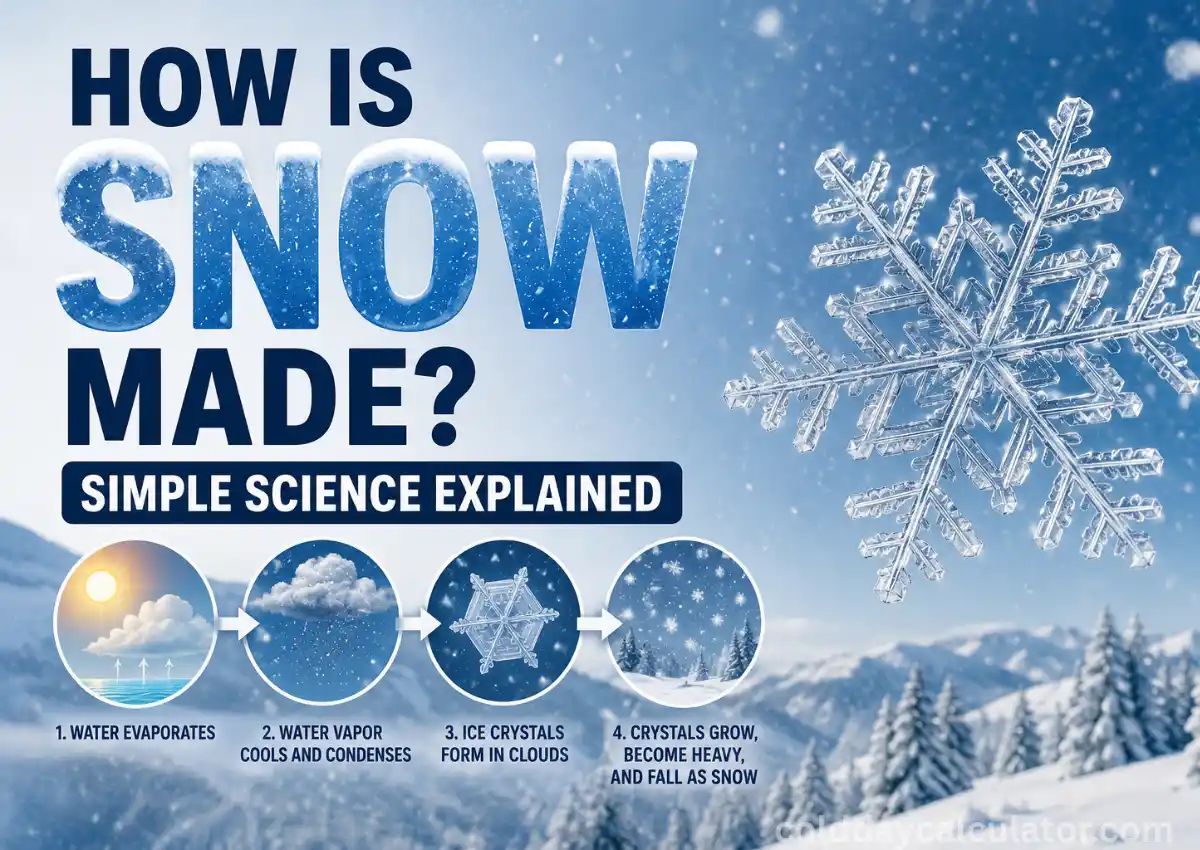
Snow may look magical when it falls from the sky, but the science behind it is actually a fascinating natural process involving clouds, freezing temperatures, water vapor, and tiny ice crystals. If you have ever wondered “how is snow made,” the simple answer is that snow forms when water vapor in clouds freezes into ice crystals high in the atmosphere.
But snow formation is much more complex than simply “cold weather.” Several atmospheric conditions must work together before delicate snowflakes can fall from the sky and cover the ground in white.
In this complete guide, we’ll explain how snow forms naturally, how snowflakes are created, why snow comes in different textures, and even how humans make artificial snow for ski resorts.
What Is Snow?
Snow is a form of frozen precipitation made from ice crystals that develop inside clouds.
Unlike rain, which falls as liquid water, snow forms when atmospheric temperatures are cold enough for water vapor to freeze before reaching the ground.
Snow usually appears white because ice crystals reflect and scatter sunlight in many directions.
| Precipitation Type | State | Formation Temperature |
|---|---|---|
| Rain | Liquid | Above 0°C (32°F) |
| Snow | Frozen | Below 0°C (32°F) |
| Sleet | Partially frozen | Mixed temperatures |
How Is Snow Made in Nature?
Snow formation starts with the Earth’s water cycle.
Heat from the sun causes water from oceans, lakes, and rivers to evaporate into the atmosphere as water vapor.
As this vapor rises higher into the sky, temperatures become colder.
When the moist air reaches freezing conditions, the vapor condenses around microscopic particles floating in the atmosphere such as:
- Dust
- Pollen
- Smoke particles
- Sea salt
These tiny particles act as a surface where ice crystals can begin forming.
Once the cloud temperature drops below freezing, water vapor freezes directly into ice crystals.
Over time, the crystals grow larger by collecting additional moisture inside the cloud.
Eventually, the crystals become heavy enough to fall toward Earth as snowflakes.
Step-by-Step Snow Formation Process
| Step | What Happens |
|---|---|
| 1 | Water evaporates into atmosphere |
| 2 | Water vapor rises into colder air |
| 3 | Clouds form from condensed moisture |
| 4 | Ice crystals develop around particles |
| 5 | Crystals grow larger inside clouds |
| 6 | Snowflakes become heavy and fall |
What Conditions Are Needed for Snow to Form?
Snow cannot form from cold temperatures alone.
Several important conditions are required:
1. Moisture in the Atmosphere
Clouds need enough water vapor to produce precipitation.
2. Freezing Temperatures
Cloud temperatures must usually remain below 0°C (32°F) for ice crystals to develop.
3. Microscopic Particles
Dust and airborne particles help ice crystals begin forming.
4. Stable Cloud Conditions
Snowflakes need time inside clouds to grow before falling.
| Condition | Role in Snow Formation |
|---|---|
| Water Vapor | Creates cloud moisture |
| Cold Air | Freezes vapor into crystals |
| Particles | Provide crystal formation surface |
| Cloud Growth | Allows snowflakes to enlarge |
How Snowflakes Form Inside Clouds
Snowflakes begin as tiny ice crystals that are almost microscopic.
As they move through supercooled cloud droplets, more water vapor freezes onto them.
Because water molecules naturally arrange themselves in a hexagonal structure when frozen, snowflakes develop six-sided patterns.
Changes in temperature and humidity affect how each branch grows, which is why snowflakes can appear so different from one another.
Scientists studying snow crystals have identified many different crystal patterns including:
- Plates
- Needles
- Dendrites
- Columns
- Stellar crystals
Why Are Snowflakes Different Shapes?
Snowflake shape depends mainly on:
- Temperature
- Humidity
- Cloud conditions
- Air turbulence
| Snowflake Type | Typical Conditions |
|---|---|
| Plates | Moderate cold |
| Needles | Very cold temperatures |
| Dendrites | Moist clouds |
| Columns | Specific humidity ranges |
This is why no two snowflakes are believed to form exactly the same way.
How Is Snow Made for Kids?
Snow forms when tiny drops of water high in the sky freeze into ice crystals.
Inside cold clouds, these crystals stick together and grow bigger.
When they become too heavy to stay in the cloud, they fall to the ground as snowflakes.
You can think of clouds like giant cold cotton balls filled with frozen water pieces floating in the sky.
Fun Snow Facts for Kids
- Every snowflake has 6 sides
- Snowflakes start as tiny ice crystals
- Snow can fall even when the ground is not frozen
- Some snowflakes are smaller than a penny
What Is Snow and How Is Snow Made Artificially Step by Step?
Artificial snow is human-made snow produced by snow machines, usually at ski resorts.
Snowmaking allows resorts to maintain ski slopes even when natural snowfall is limited.
How Artificial Snow Is Made Step by Step
| Step | Process |
|---|---|
| 1 | Water is pumped into snow machines |
| 2 | Compressed air mixes with water |
| 3 | Tiny droplets spray into freezing air |
| 4 | Droplets freeze into ice particles |
| 5 | Artificial snow lands on ski slopes |
Most snowmaking systems require temperatures below freezing to work efficiently.
Natural Snow vs Artificial Snow
| Feature | Natural Snow | Artificial Snow |
|---|---|---|
| Formation | Cloud processes | Snow machines |
| Texture | Light and fluffy | Dense and wet |
| Water Content | Lower | Higher |
| Common Use | Weather snowfall | Ski resorts |
Different Types of Snow
Dry Snow
Dry snow forms during very cold weather and contains little liquid water. Skiers often call it powder snow.
Wet Snow
Wet snow contains more liquid water and sticks easily to surfaces, trees, roads, and power lines.
Slush
Slush forms when snow partially melts into a heavy watery mixture.
Freezing Rain
Freezing rain occurs when melted snow refreezes upon contact with cold surfaces.
Why Does Snow Sometimes Turn Into Rain?
Snowflakes may melt before reaching the ground if they pass through warmer air layers.
If temperatures rise above freezing while snow falls:
- Snow melts into rain
- Partial melting creates sleet
- Refreezing creates freezing rain
This explains why winter storms often produce mixed precipitation.
Why Snow Is Important for Earth
Snow plays an important role in Earth’s climate and ecosystems.
- Stores fresh water
- Insulates soil and plants
- Supports rivers during spring melt
- Reflects sunlight back into space
- Supports winter tourism economies
Mountain snowpack supplies drinking water for millions of people worldwide.
Can It Snow Above Freezing Temperatures?
Yes, snow can sometimes fall when surface temperatures are slightly above freezing.
This happens because snowflakes may remain frozen while traveling through shallow warm air near the ground.
Heavy snowfall can also cool surrounding air enough for flakes to survive temporarily.
Interesting Facts About Snow
- Every snowflake contains a six-sided crystal structure
- Snow has been recorded on every continent, including Antarctica
- Billions of snowflakes fall during large winter storms
- Some snowflakes can combine into clusters several inches wide
- Snow helps regulate Earth’s temperature by reflecting sunlight
FAQs
How is snow made naturally?
Snow forms when water vapor freezes into ice crystals inside cold clouds.
Why is snow white?
Snow appears white because ice crystals reflect and scatter sunlight.
Can humans make snow?
Yes, ski resorts use snow machines to create artificial snow using water and compressed air.
What temperature creates snow?
Cloud temperatures usually need to remain below 0°C (32°F) for snow to form.
Why are snowflakes six-sided?
Water molecules naturally freeze into hexagonal crystal structures.
Want to check free snowfall forecasting? Have a look at our Snow Day Calculator .Final Thoughts
So, how is snow made? Snow forms through a delicate natural process involving water vapor, freezing temperatures, microscopic particles, and ice crystal growth inside clouds.
Although snow may seem simple when it falls from the sky, every snowflake forms through complex atmospheric science and constantly changing weather conditions.
Whether you are learning about snow for school, teaching children about winter weather, or simply curious about how snowflakes form, understanding snow formation makes winter weather even more fascinating.
Resources & Scientific References
Related Posts

How to Drive in Snow Safely for Beginners
If you are learning how to drive in snow for the first time, the experience can feel stressful and u...

Does It Snow in Texas? Cities That Get Snow
Yes, it does snow in Texas, especially in northern and western parts of the state during winter. Whi...
Does It Snow in Australia? Full Guide
Yes, it does snow in Australia, especially in the southern alpine regions during winter. While Austr...